Reducing post-harvest losses in Cameroon
This challenge is in phase: Understand target
🚀Join the Lab of Tomorrow from 18-22 June 2026 in Yaoundé and develop joint business solutions for tackling post-harvest losses in Cameroon!
GIZ and Der Mittelstand. BVMW invite you to apply for the lab of tomorrow business development programme with the kind support of the EU and GECAM. The event will take place during the PROMOTE trade fair from 18-22 June 2026 at the Enovation Factory in Yaoundé, Cameroon.
What’s in it for you?
We match your company with European and African businesses and experts that bring complementary skills to the table. Together, you will co-create business solutions for local markets. You will explore potential for joint ventures or strategic partnerships and benefit from local and international insights and expertise.
Participation in the lab of tomorrow is free of charge, and lunch will be provided during the programme. GIZ will support you with visa procurement, hotel reservations, logistics, as well as translation services and delegation coordination if needed.
Additionally, you will have the opportunity to attend key events taking place in Yaoundé at the same time, including the EU Business Forum (16–17 June), the German-Cameroonian Business for Development Forum (18 June) and the PROMOTE trade fair (12–21 June). Participation in these events is free of charge (subject to availability of tickets), with registration running via GIZ. This creates valuable opportunities for on-site networking and engagement. Meetings with public and private sector stakeholders as well as a ministerial meeting can also be facilitated around these events with the support of GIZ.
How it works:
- Identify a business opportunity you are committed to pursuing to reduce post-harvest losses, e.g. through refrigeration, storage or agro-processing solutions.
We match you with relevant European and African business partners based on common business interests and complementary resources.
Co-create concrete business models in a three-day workshop using the design thinking method.
Pitch your business solution to a panel of experts and potential partners in an online demo session to gather feedback on feasibility, innovation, and impact potential.
- The strongest teams can apply to receive incubation support to further develop and pilot their business ideas.
Please note, that the working language of this lab of tomorrow will be French.
Partners

01
Understand
Cameroon’s agricultural sector and opportunities
Cameroon stands out as one of Central Africa’s most agriculturally diverse markets, with favorable climatic conditions enabling the production of a wide range of crops, including fruits, vegetables, cassava, maize, cocoa, coffee, and cotton. The World Bank highlights the country’s strong potential, particularly its endowment with high-value agricultural products. With a population of over 28 million, agriculture remains a cornerstone of Cameroon’s economy and a key driver of livelihood. The sector employs around 43% of the workforce and contributes roughly 17% to GDP, underlining its scale, relevance, and untapped growth potential.
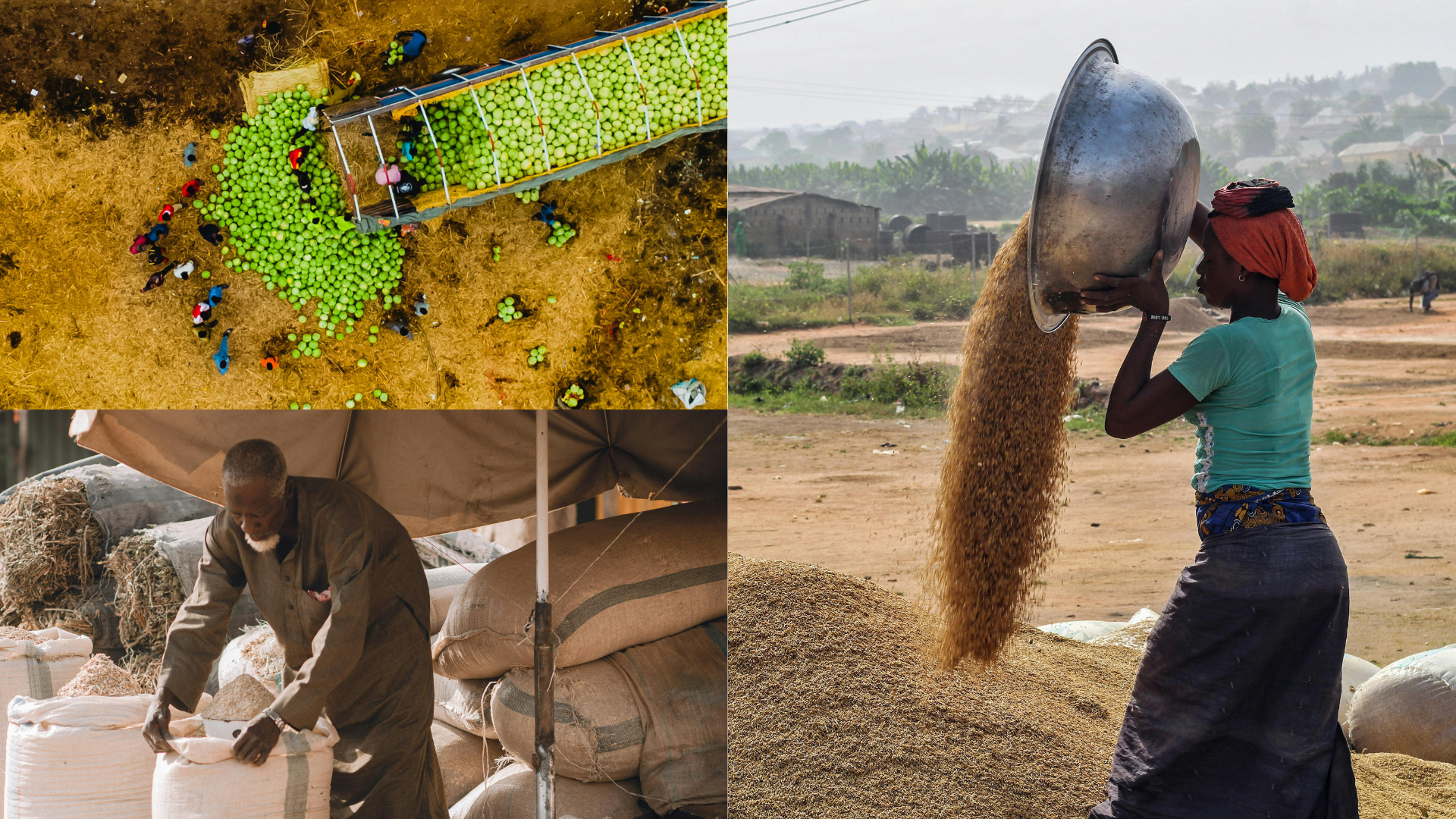
Post-harvest losses remain one of the most critical challenges in Cameroon’s agri-food sector. According to the FAO, up to 40% of certain crops - particularly fruits, vegetables, and tubers - are lost after harvesting, with an estimated annual economic loss of €1.5-2.5 billion. The losses occur across the entire value chain, from production to marketing, directly reducing farmer incomes while leaving market demand unmet. The main drivers of these post-harvest losses include insufficient storage, limited cold chain infrastructure, unreliable electricity, inadequate processing capacity, and weak packaging and logistics systems. In line with this, recent logistics-focused research in Cameroon identifies poor storage, transportation, packaging, and information systems as key factors influencing post-harvest losses among smallholder farmers.
For German and European companies, this challenge offers a significant opportunity to enter a growing market with an estimated annual potential of €300-800 million, provided that 20-30% of current post-harvest losses are targeted. Unlike primary production, reducing post-harvest losses does not require expanding farmland or increasing agricultural inputs. Instead, it relies on technological solutions, infrastructure, services, and business models in areas where German and European companies have strong capabilities: cooling, drying, storage, packaging, processing, energy efficiency, logistics, and digital monitoring.
From a business perspective, Cameroon therefore offers a rare combination of immediate demand, clear technical gaps, and potential for scalable business models. Therefore, we invite interested companies to take part in our lab of tomorrow business development programme.